What is 4-AcO-MET?
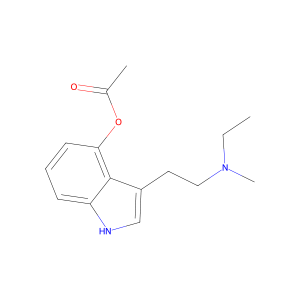
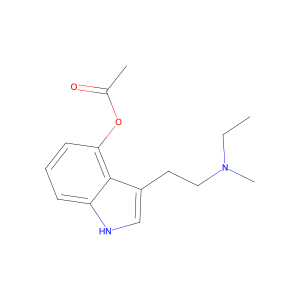
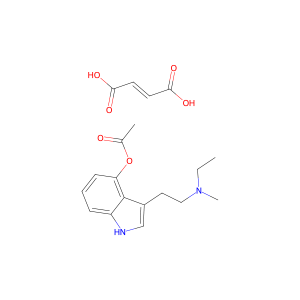
4-AcO-MET, also known as Metacetin, Azomet or O-acetylmetocin, is a synthetic psychedelic tryptamine. Its chemical name is 4-acetoxy-N-methyl-N-ethyltryptamine. The compound is the acetate ester analogue of 4-HO-MET (Metocin), with an acetoxy group at the 4-position of the indole ring and methyl and ethyl groups attached to the terminal nitrogen.
Chemical relationship to 4-HO-MET
The difference between 4-AcO-MET and 4-HO-MET lies in the group attached to the oxygen at position 4. In 4-HO-MET, the oxygen carries a hydrogen atom; in 4-AcO-MET, it carries an acetyl group. This makes 4-AcO-MET an ester of the hydroxy compound. Hydrolysis could therefore produce 4-HO-MET, as occurs with several other acetoxy-substituted tryptamines.
That structural relationship is often used to describe 4-AcO-MET as a prodrug of Metocin. It is a reasonable hypothesis, but direct human pharmacokinetic evidence for the conversion is limited. The presence of an ester group alone does not establish how rapidly it is hydrolysed or how much of the intact compound may remain available to interact with receptors.
Receptor activity
4-AcO-MET was included in a 2023 study by Kozell and colleagues examining substituted tryptamines at serotonin receptors and the serotonin transporter. In the 5-HT2A assays, the compound showed measurable binding and functional activity, but its maximum response was substantially below that of serotonin. It also interacted with 5-HT2C and 5-HT1A receptors. These measurements were made in laboratory cell systems; they describe receptor-level activity, not the intensity or character of a human psychedelic experience. The study is available in the Journal of Pharmacology and Experimental Therapeutics.
The 4-hydroxy analogue, 4-HO-MET, has been studied more extensively. Its metabolism has been examined in human liver microsomes and in authentic urine samples, and its receptor profile has also been measured. Those findings help explain the pharmacological context of 4-AcO-MET, although they do not directly measure the acetate ester’s properties.
Reported effects
Accounts collected by PsychonautWiki compare 4-AcO-MET with 4-HO-MET and other psilocin-related tryptamines. Users describe a visually oriented psychedelic experience, with changes in colour, pattern recognition and thought. The reports also include physical stimulation and nausea, while anxiety or paranoia may occur in less comfortable experiences.
| Physical and visual effects | Cognitive and emotional effects |
|---|---|
|
|
These accounts are anecdotal and do not establish how reliably any effect occurs. In particular, the similarity to 4-HO-MET does not prove that 4-AcO-MET is converted completely to Metocin before producing its effects.
There is no controlled human study that defines the pharmacokinetics, clinical duration or safety profile of 4-AcO-MET. Its receptor activity has been measured in vitro, but its proposed conversion to 4-HO-MET and the contribution of the intact ester remain incompletely characterized.