Synthetic Opioid Analogues
What Are Synthetic Opioid Analogues?
Synthetic opioid analogues are laboratory-made compounds structurally related to other opioids. The phrase is often used broadly in discussions of newer synthetic opioids, where it covers several families rather than one molecular series. Fentanyl analogues, benzimidazole opioids commonly called nitazenes, and compounds such as U-47700 have different frameworks.
Some synthetic opioids are established medicines. Others have appeared in toxicology reports with little or no controlled human research. A newly detected compound may already have appeared in medicinal chemistry decades earlier. In this setting, “new” often concerns its appearance in a particular drug supply, not the date it was first discovered.
Fentanyl Analogues and Non-Fentanyl Families
Fentanyl and its close analogues share an anilidopiperidine framework. Changes around that structure can alter receptor interactions, metabolism and distribution through the body. Nitazenes instead belong to a benzimidazole family. They can act at the same receptor as fentanyl without being fentanyl analogues.
In a study comparing butyrylfentanyl, U-47700 and MT-45, all three activated mu-opioid receptors in cell experiments and produced antinociceptive effects in mice. Yet their receptor-binding results did not directly predict their relative activity in the animal test. Absorption, tissue distribution and other biological processes stand between a receptor assay and a whole-organism response.
The term research chemical does not resolve these differences. It provides no information about whether a compound has been studied in people, whether its metabolites remain active or whether a labelled sample contains the stated substance.
What a Potency Measurement Can Tell Us
Affinity describes how readily a compound binds under specified conditions. Potency describes the concentration or exposure needed to produce a specified effect. Efficacy concerns the maximum response the compound can produce in the experimental system. These measurements answer related questions, but they cannot be substituted for one another.
A 2025 investigation of thirteen nitazene variants found substantial differences in mu-receptor affinity, functional potency and selectivity relative to other opioid receptors. Most compounds showed strong mu-receptor activity, while several had a different balance of mu and kappa activity.
A statement that one substance is “more potent” is incomplete unless it identifies the measured outcome and method. A cellular signalling result, an animal pain-response test and a clinical respiratory effect are different measurements. Translating a ratio between them into an assumed human exposure is not justified.
Clinical Reports Describe More Than Sedation
Mu-opioid receptor activation can suppress breathing and consciousness. Severe poisoning may also involve oxygen deprivation, aspiration or other complications that continue after the initial receptor effect has been reversed.
An analytically confirmed U-47700 case described a 23-year-old woman with respiratory depression and cyanosis who responded to naloxone. She also developed noncardiogenic pulmonary oedema, requiring respiratory support. Laboratory testing identified the parent compound and several metabolites. One case cannot show how frequently these complications occur.
More recent emergency data include a small comparison of confirmed novel-opioid and fentanyl exposures. Nine patients with novel opioids detected received more in-hospital naloxone boluses, on average, than eleven patients whose testing identified fentanyl alone. The novel-opioid group contained different compounds, and the comparison was not randomized. The small, varied sample cannot support a universal ranking of substances or a fixed treatment rule.
Why Identification Can Lag Behind Exposure
A toxicology screen only looks for the substances, metabolites or molecular patterns it was designed to detect. An assay aimed at familiar opiates may not recognize a structurally different synthetic opioid. Even mass-spectrometric screening depends on its analytical scope, reference data and the concentrations present.
The parent compound and its breakdown products can have different detection windows, and some metabolites may retain biological activity. A laboratory needs to distinguish a confirmed identification from a tentative match; the same principle applies when reading a certificate of analysis for a submitted material.
Finding an opioid in a sample supports an exposure assessment, but concentration alone does not explain every clinical outcome. Timing, other drugs, tolerance and the condition of the patient remain relevant. Conversely, a negative result on a limited screen does not rule out an opioid emergency in someone with impaired breathing and consciousness.
Showing the single result
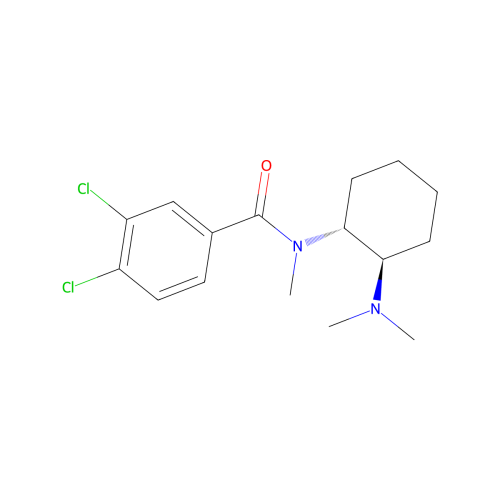
U-47700
Price range: $410.00 through $8,715.00Select options This product has multiple variants. The options may be chosen on the product page