Benzofurans
What Are Benzofurans?
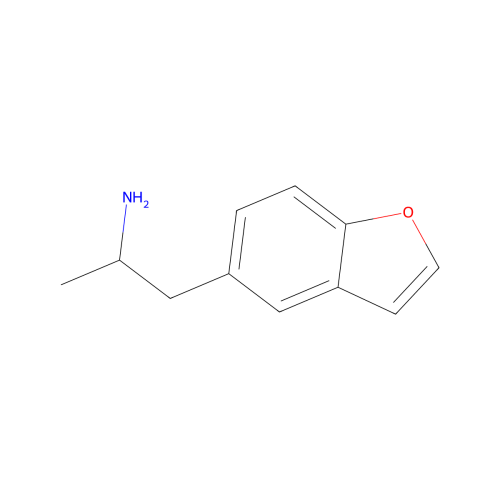
Benzofurans are compounds based on a fused ring system containing a benzene ring and an oxygen-containing furan ring. In the context of empathogenic substances, the term usually refers to a narrower group of aminoalkylbenzofurans, including 5-APB, 6-APB and 5-MAPB. The benzofuran structure itself does not make a compound psychoactive or empathogenic; many unrelated molecules also contain this ring system.
The psychoactive members attracted attention because some of their effects and pharmacological properties resemble those of MDA and MDMA. Differences in transporter activity, receptor interactions and metabolism can matter even when substances are discussed under the same informal label.
Positions and Ring Structures
In 5-APB and 6-APB, the numbers indicate where the aminopropyl side chain is attached to the benzofuran ring system. They are positional isomers: the molecular formula is the same, but the side chain is connected at a different location.
The additional M in 5-MAPB denotes methyl substitution on the nitrogen. A related abbreviation, APDB, refers to a dihydrobenzofuran framework with a different degree of saturation in the oxygen-containing ring. APB and APDB therefore should not be used interchangeably.
An investigation of APB positional isomers examined the problem of identifying closely related compounds in submitted materials. Similar abbreviations or a shared informal product description cannot replace structural confirmation. The broader term research chemicals is even less specific.
Monoamine Release
Serotonin, dopamine and noradrenaline help regulate several aspects of mood, arousal and autonomic function. Their transporters normally contribute to removing them from the space outside neurons. Some psychoactive benzofurans act as transporter substrates and promote neurotransmitter release.
In a study using rat brain preparations, 5-APB, 6-APB and their N-methyl derivatives acted as releasers at all three monoamine transporters tested. Experiments in conscious male rats also found increased extracellular dopamine and serotonin after 5-APB or 6-APB, together with substantial behavioural activation.
The experiments help explain the pharmacological relationship to MDA and MDMA. They measured neurotransmission and animal behaviour, rather than emotional closeness in people. Controlled human studies would be needed to establish which subjective and social effects are reproducible.
Receptors Add Another Layer
A comparison of benzofuran and related MDMA analogues found differences in their receptor-binding and functional profiles. In the experiments reported, 5-APB showed agonist activity at several serotonin receptor subtypes, including 5-HT2A, 5-HT2B and 5-HT2C. The other compounds tested did not produce an identical pattern.
Results at 5-HT2A are relevant to hypotheses about perceptual effects, while 5-HT2B activity attracts attention in the assessment of possible cardiac effects. A positive receptor assay is a reason to investigate the consequences of exposure. It does not establish that a particular benzofuran has caused a defined rate of valve disease in humans.
Exposure duration, concentrations at tissues and active metabolites would all affect that assessment. A compound may have several measurable actions, but they need not contribute equally under real physiological conditions.
Documented Acute Toxicity
Clinical poisoning can involve agitation, cardiovascular disturbance, abnormal temperature regulation and neurological symptoms.
A report of analytically confirmed 5-MAPB exposure described a previously healthy 24-year-old man with hypertension, tachycardia, mild hyperthermia, clonus, convulsions and reduced consciousness, among other findings. A single case cannot establish how often these complications occur, or whether another benzofuran would produce the same clinical course.
Screening Results and Chemical Confirmation
In a study of commercial urine immunoassays, several benzofurans cross-reacted with some amphetamine or ecstasy tests. Such a result reflects the response of that particular assay. It does not establish that the sample contains MDMA or uniquely identify which benzofuran is present.
More selective analytical methods are needed when exact identification matters. Even then, the report should distinguish the original compound from metabolites and account for closely related isomers where relevant. A compound detected in a biological sample also needs to be interpreted alongside the clinical history and other substances found.
When reading a certificate of analysis, the exact compound name and the identification method deserve as much attention as a purity percentage. For closely related benzofurans, an unresolved positional isomer is an uncertainty about which substance was examined.
Showing all 4 results
5-APB
Price range: $546.00 through $9,345.00Select options This product has multiple variants. The options may be chosen on the product page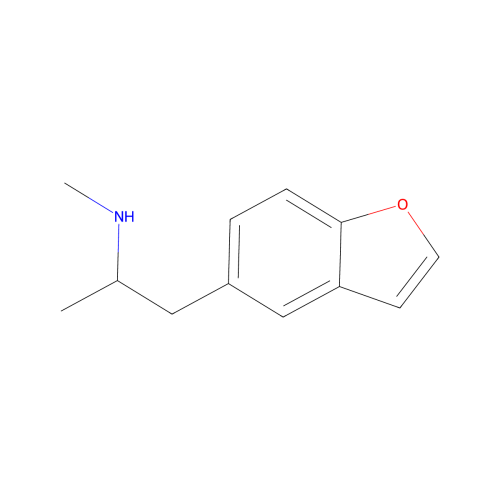
5-MAPB
Price range: $546.00 through $9,345.00Select options This product has multiple variants. The options may be chosen on the product page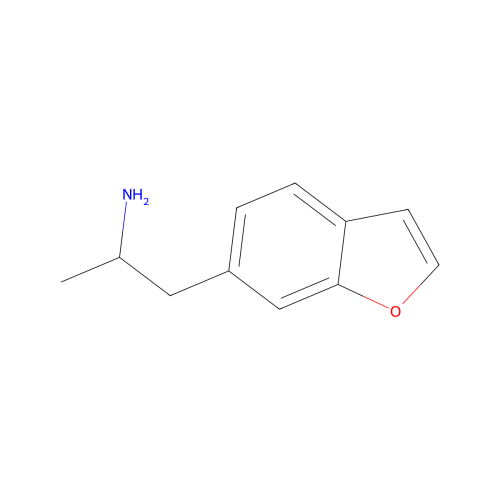
6-APB
Price range: $546.00 through $9,345.00Select options This product has multiple variants. The options may be chosen on the product page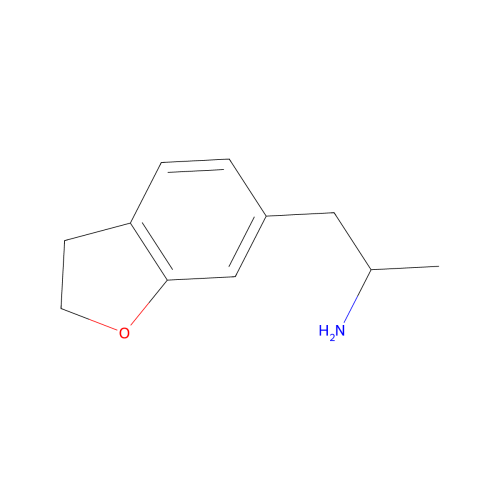
6-APDB
Price range: $546.00 through $9,345.00Select options This product has multiple variants. The options may be chosen on the product page