Phenethylamines
Phenethylamines are compounds based on a phenyl ring connected to an amine through a two-carbon chain. The family includes endogenous signalling molecules and substances with very different pharmacological actions. The empathogenic compounds discussed here form one subset, associated with emotional openness and interpersonal closeness.
MDA, MDMA and MDEA are familiar examples of substituted phenethylamines discussed in this context. Each is also an amphetamine derivative. The classifications are nested: amphetamines sit within the broader phenethylamine family, while empathogen describes a pattern of effects.
One Framework, Several Patterns of Activity
Substituents can occur on the aromatic ring, the side chain or the nitrogen. Their positions influence how the molecule interacts with receptors, transporters and enzymes.
For example, MDMA and mescaline both belong within the broad phenethylamine family, but their principal pharmacological profiles differ. MDMA’s actions prominently involve monoamine transporters and release. Mescaline is a classic serotonergic psychedelic whose receptor activity includes 5-HT2A agonism.
Where Empathogenic Properties Come From
Many compounds described as empathogens interact with serotonin and other monoamine transporters. Their activity can change mood, arousal and responses to emotional information. The relative actions at serotonin, dopamine and noradrenaline systems are relevant, but no single transporter ratio functions as a validated numerical measure of human empathy.
A study can ask whether participants feel closer to others, recognize facial emotions more accurately or behave differently in a social task. Those questions are not equivalent, and a compound that increases self-reported friendliness may have other effects that impair judgement or emotional recognition.
For newly encountered research chemicals, claims of empathogenic activity may instead rest on structural analogy or user reports. Those observations can guide research, but they leave open whether the effect is consistent, how it is produced and what physiological changes accompany it.
Related Structures Are Not Interchangeable
Synthetic cathinones contain a carbonyl group that distinguishes them from the corresponding amphetamine structures. Even within the cathinones, however, the actions are far from uniform.
In laboratory comparisons of designer cathinones, some compounds promoted serotonin release, whereas others acted predominantly as dopamine and noradrenaline uptake inhibitors without the same releasing properties. Grouping them all as variants of one familiar drug would lose the mechanistic information.
Aminoindanes are structurally constrained relatives within the wider discussion of phenethylamine-related substances. A study of human monoamine transporter systems found that MDAI acted mainly as a substrate at serotonin and noradrenaline transporters under the conditions tested. That finding concerns cellular pharmacology, not a demonstration of improved empathy in people.
Benzofuran-based compounds can also be discussed alongside substituted phenethylamines because of overlapping actions. Their fused ring system deserves its own chemical description.
Perceptual Effects Can Overlap with Emotional Effects
The boundaries between empathogenic and psychedelic responses are not absolute. MDA is an example where both have been investigated. In a controlled study of MDA and visual perception, participants reported increased closed-eye imagery and other hallucinogen-like effects, with considerable variation between individuals.
The study also examined perceptual performance rather than relying only on descriptions of imagery. Emotional warmth does not exclude perceptual disturbance, and pronounced stimulation does not rule out changes in social feeling.
Human Safety Data Can Change the Interpretation
4-Fluoroamphetamine, or 4-FA, has sometimes been discussed in relation to both stimulant and empathogenic effects. A controlled human safety study found marked cardiovascular changes alongside positive mood effects. After an interim review, the researchers cancelled the planned higher-exposure condition because of safety concerns.
The positive mood ratings and cardiovascular changes were observed in the same experiment. Increased friendliness or elation did not mean that blood pressure and heart rate were unaffected. Those measurements made a concern about physiological safety visible in a way that a description of the subjective experience alone could not.
Showing all 2 results
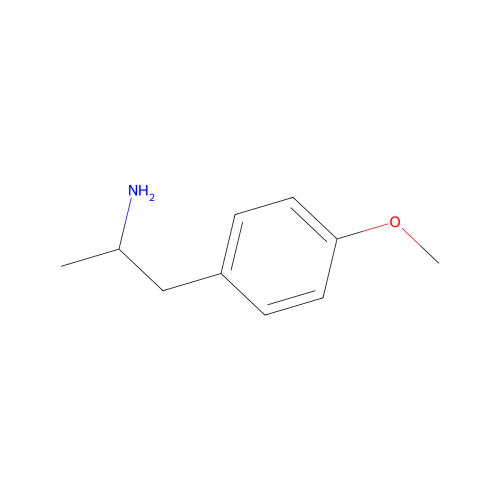
PMA
Price range: $368.00 through $2,882.00Select options This product has multiple variants. The options may be chosen on the product page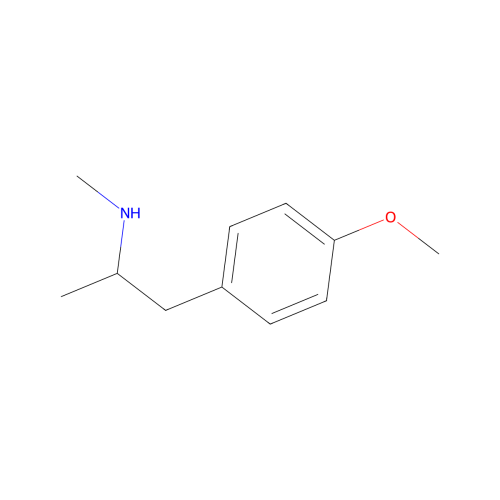
PMMA
Price range: $368.00 through $2,882.00Select options This product has multiple variants. The options may be chosen on the product page