What is 5-MeO-DMT?
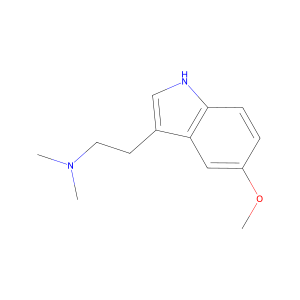
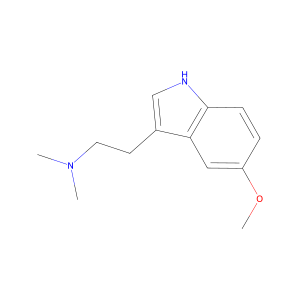
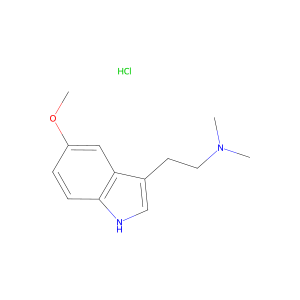
5-MeO-DMT, also known as 5-methoxy-N,N-dimethyltryptamine, is a naturally occurring psychedelic tryptamine. It is found in some plant species and in the secretions of the Sonoran Desert toad, Incilius alvarius. The molecule is structurally related to DMT, but carries a methoxy group at the 5-position of the indole ring. This apparently small change produces a markedly different pharmacological profile and a subjective experience often described as shorter, more intense and less dominated by complex visual imagery than that of N,N-DMT.
Natural occurrence and history
5-MeO-DMT has been identified in a range of plant materials and in the defensive secretions of Incilius alvarius. The presence of the compound in biological sources does not mean that every traditional or contemporary use of those materials has the same composition. In particular, toad secretion is a mixture of substances, and its chemical profile should not be reduced to 5-MeO-DMT alone.
The compound was synthesized and investigated in the twentieth century, but its modern visibility increased through reports of inhaled use and later through clinical research into short-acting psychedelic treatments. Its natural occurrence and pharmacology are reviewed in “The clinical pharmacology and potential therapeutic applications of 5-methoxy-N,N-dimethyltryptamine”.
Pharmacology
5-MeO-DMT acts on several serotonin receptors, with particularly high affinity for 5-HT1A and substantial activity at 5-HT2A. Receptor studies have often found stronger affinity for 5-HT1A than for 5-HT2A, which distinguishes it from many classic psychedelics whose subjective effects are more closely associated with 5-HT2A activation. The relationship between these receptor actions and the compound’s unusual subjective profile is still being investigated.
Its metabolism is rapid. Monoamine oxidase A (MAO-A) plays an important role in oxidative deamination, while O-demethylation produces bufotenine (5-HO-DMT). The relative contribution of these pathways depends on the route of administration and the activity of metabolic enzymes. Because MAO-A is involved in its clearance, interactions with MAO inhibitors can substantially alter exposure and are a significant toxicological concern.
Human pharmacokinetics and clinical research
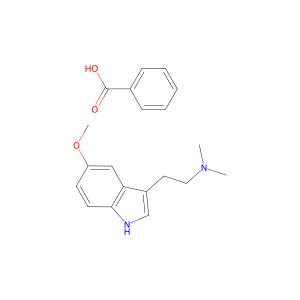
Unlike most research tryptamines, 5-MeO-DMT has been studied in controlled human trials. A 2021 inhalation study in healthy volunteers examined escalating doses and found rapid onset and a short period of acute effects. A later phase I trial investigated BPL-003, an intranasal benzoate formulation of 5-MeO-DMT, in 44 psychedelic-naive participants. The compound was rapidly absorbed, with a median time to peak plasma concentration of approximately 8–10 minutes and a terminal half-life below 27 minutes. The formulation was generally tolerated in that study; common adverse events included nasal discomfort, nausea, headache and vomiting. No serious adverse events were reported in the trial. The results are described in the phase I study of intranasal BPL-003.
A 2024 systematic review identified three clinical studies, involving 78 participants in total, and found no serious adverse events in those short-term trials. That finding offers some reassurance about short-term tolerability under the trial conditions, while leaving long-term safety and other forms of use unresolved. A larger 2026 review, which included 51 publications on DMT, 5-MeO-DMT and related evidence, further summarized the emerging clinical and pharmacological literature. See the 2024 clinical safety review and the 2026 systematic review.
Subjective effects
Descriptions of 5-MeO-DMT often emphasize the speed and intensity of the experience. Compared with N,N-DMT, users report less elaborate visual imagery and a stronger sense of overwhelming unity, loss of ordinary self-reference or complete absorption in the experience. Auditory and time perception may also change, and emotional responses can become unusually intense. The experience is generally short-lived when inhaled, although the duration depends on the formulation and route.
| Perceptual and physical effects | Cognitive and emotional effects |
|---|---|
|
|
The short duration does not mean that the experience is mild. In clinical studies, the intensity of acute effects was closely related to rapid changes in plasma concentration. The same feature that makes the compound attractive for research into brief interventions also makes careful medical screening and monitoring important.
Toxicological considerations
5-MeO-DMT can produce intense acute physiological and psychological effects. Nausea, vomiting, anxiety and transient cardiovascular changes have been reported in clinical settings. More serious reactions have been described outside controlled trials, particularly when the compound is combined with other serotonergic substances or MAO inhibitors. The available clinical safety reviews concern selected participants under monitored conditions; they should not be generalized to unregulated products, uncertain concentrations or combinations with other drugs.
Research into 5-MeO-DMT as a potential therapeutic compound is ongoing. The existing trials provide preliminary information about short-term tolerability and pharmacokinetics, but they do not establish long-term safety or clinical effectiveness across psychiatric conditions.