What is 4-AcO-DET?
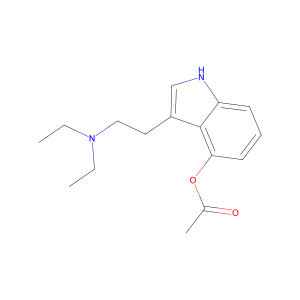
4-AcO-DET, also known as 4-acetoxy-DET or Ethacetin, is a synthetic psychedelic tryptamine. Its chemical name is 4-acetoxy-N,N-diethyltryptamine. The molecule has an acetate ester at the 4-position of the indole ring and two ethyl groups attached to the terminal nitrogen. It is closely related to 4-HO-DET (Ethocin), the corresponding 4-hydroxy compound, and belongs to the same broad family as psilocin and other 4-substituted tryptamines.
History and chemical structure
4-AcO-DET was synthesized by Albert Hofmann during the early development of substituted tryptamines at Sandoz. Its structure was part of a wider effort to investigate derivatives of psilocin, including compounds in which the 4-hydroxy group was replaced by an acetate or phosphate ester. The distinction is chemically important: an acetate ester can be removed by hydrolysis, whereas a phosphate ester follows a different enzymatic route.
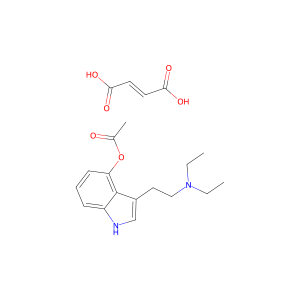
The relationship between 4-AcO-DET and 4-HO-DET is not merely a naming convention. The acetate group changes the polarity and other physicochemical properties of the molecule, and may influence how it is absorbed or transformed. In 2026, Naeem and colleagues reported single-crystal X-ray structures for both compounds as fumarate salts. Their study provides direct structural information about the solid-state arrangement of the two substances, including their hydrogen-bonding networks. See “Crystal structures of new psychoactive substances 4-HO-DET and 4-AcO-DET”.
Pharmacology and metabolism
The 4-acetoxy group has often led 4-AcO-DET to be described as a possible prodrug of 4-HO-DET. There is experimental support for this relationship in animal research: 4-AcO-DET has been reported to undergo rapid hydrolysis, producing 4-HO-DET. The 2026 crystallographic study by Naeem and colleagues discusses this conversion and cites a receptor-binding screen in which 4-AcO-DET did not meet the threshold for measurable 5-HT2A binding at the initial test concentration. A different 2023 functional study by Kozell and colleagues reported measurable binding and activity in its 5-HT2A assay. The results are not directly interchangeable: the studies used different assay approaches and endpoints, so neither should be treated as a complete description of the compound’s pharmacology. See Kozell et al. (2023) and Glatfelter et al. (2023).
Subjective effects
The limited user accounts summarized in PsychonautWiki’s 4-AcO-DET entry compare the experience with 4-HO-DET, psilocin and other 4-substituted tryptamines. Users describe visual changes, altered perception of time and shifts in thought, but there is not enough controlled human evidence to establish how closely the acetate ester resembles its hydroxy counterpart.
| Reported perceptual and physical effects | Reported cognitive and emotional effects |
|---|---|
|
|
The reports have not been clinically validated and are too limited to establish a typical response, and the proposed conversion to 4-HO-DET has not been characterized in a controlled human pharmacokinetic study.
Analytical identification
4-AcO-DET and 4-HO-DET have both appeared in products marketed as mushroom-based edibles. The distinction is important because products sold under a familiar label do not necessarily contain psilocybin. The 2026 crystal-structure paper describes both compounds in commercial samples and reports that the authors’ laboratory had encountered them in a range of extracts and infused products. Those samples are not a representative survey of the wider market, but they demonstrate that synthetic tryptamines can appear in products presented as something else.