What is 4-HO-DET?
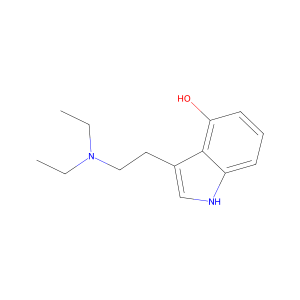
4-HO-DET, also known as Ethocin or CZ-74, is a synthetic psychedelic tryptamine. Its chemical name is 4-hydroxy-N,N-diethyltryptamine. The molecule is closely related to psilocin, but carries two ethyl groups rather than two methyl groups on the terminal nitrogen. It is the hydroxy counterpart of 4-AcO-DET (Ethacetin), which carries an acetate ester at the same position on the indole ring.
History and early use
4-HO-DET was developed at Sandoz during the late 1950s as part of the early exploration of psilocybin and psilocin derivatives. It became known as CZ-74 and was one of the short-acting tryptamines used in psycholytic therapy in the 1960s. In this form of psychotherapy, the aim was not to induce a complete loss of contact with the therapeutic setting; the substance was used at levels intended to leave the patient able to communicate and work with the therapist.
A review of lower-dose psycholytic therapy identifies CZ-74 alongside ethocybin as one of the short-acting derivatives developed by Sandoz and traces their use within the clinical practice of the 1960s (“Lower-dose psycholytic therapy – A neglected approach”).
In 1989, Jochem Gartz reported that 4-HO-DET and the corresponding phosphate ester could be produced in Psilocybe mushroom mycelium after the addition of the unsubstituted precursor DET. This was a biochemical observation in fungal culture, not evidence that 4-HO-DET is a naturally occurring constituent of wild mushrooms in meaningful amounts.
Pharmacology
4-HO-DET has measurable activity at serotonin receptors, including 5-HT2A. In a 2023 study, Kozell and colleagues examined its affinity and functional activity at 5-HT2A, 5-HT2C and 5-HT1A receptors. In the 5-HT2A assay, it produced a substantial response, although the measured efficacy was below that of serotonin. The results help establish its serotonergic activity, but they do not explain every aspect of the human psychedelic experience. The study is available in the Journal of Pharmacology and Experimental Therapeutics.
The acetate ester 4-AcO-DET is often described as a possible prodrug of 4-HO-DET. The 2026 structural study by Naeem and colleagues discusses evidence that 4-AcO-DET undergoes rapid hydrolysis in animal experiments. This supports the proposed relationship, although it does not establish the time course of conversion in humans.
Subjective effects
Descriptions in PsychonautWiki’s 4-HO-DET entry, together with historical accounts, generally compare the experience with psilocin and other 4-hydroxy tryptamines. Visual changes, altered thought and changes in emotional tone are described, but the available reports do not provide a controlled clinical profile.
| Physical and visual effects | Cognitive and emotional effects |
|---|---|
|
|
These effects are based on reports rather than controlled human trials. Historical use in psycholytic therapy provides context for the compound’s early clinical interest, although it does not meet modern standards for establishing safety or efficacy.
Structural characterization
In September 2026, Naeem and colleagues published single-crystal X-ray structures of 4-HO-DET and 4-AcO-DET salts. The work describes the solid-state arrangement of each compound and the hydrogen bonds formed between the tryptammonium ions and their fumarate counterions. Such data are useful for chemical identification and reference standards, but crystal structures do not establish receptor activity, metabolism or clinical effects. The paper is “Crystal structures of new psychoactive substances 4-HO-DET and 4-AcO-DET”.
4-HO-DET Products
Scientific Data
Identity and Structure
| Chemical Name | 4-HO-DET |
|---|---|
| Catalog Entity Type | Compound |
| Formula | C14H20N2O |
| Molar Mass | 232.327 g·mol−1 |
| CAS | 22204-89-3 |
| CAS Numbers and Substance Forms | 22204-89-3 |
| Synonyms | 4-Hydroxy-DET; 4-OH-DET; 4-Hydroxy-N,N-diethyltryptamine; Ethocin; CZ-74; CZ74 |
| IUPAC Name | 3-(2-diethylaminoethyl)-1H-indol-4-ol |
| InChI | InChI=1S/C14H20N2O/c1-3-16(4-2)9-8-11-10-15-12-6-5-7-13(17)14(11)12/h5-7,10,15,17H,3-4,8-9H2,1-2H3 |
| InChIKey | OHHYMKDBKJPILO-UHFFFAOYSA-N |
| SMILES | CCN(CC)CCc1c[nH]c2cccc(O)c12 |
Chemical Identifiers
| PubChem CID | 9991554 |
|---|---|
| ChemSpider ID | 8167136 |
| UNII | 7E0BR15575 |
| ChEMBL ID | ChEMBL143202 |
| CompTox DTXSID | DTXSID60176755 |
Physical Properties
| Melting Point | 104 to 106 °C (219 to 223 °F) |
|---|
Clinical Data
| Drug Class | Serotonin receptor agonist; Serotonin 5-HT2A receptor agonist; Serotonergic psychedelic; Hallucinogen |
|---|---|
| Routes of Administration | Oral |
| ATC Code | None |
Pharmacokinetics
| Onset of Action | 30–45 minutes |
|---|---|
| Duration of Action | 2–6 hours |
Legal Status
| Legal Status (Wikipedia Source Text) | DE: Anlage I (Authorized scientific use only) UK: Class A |
|---|
Sources and Attribution
| Wikipedia Source URL | https://en.wikipedia.org/?curid=1130259 |
|---|