What is DET?
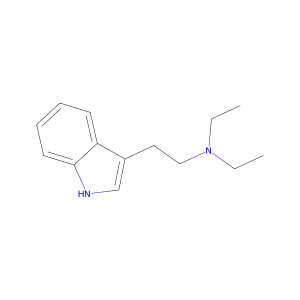
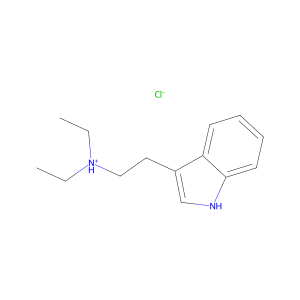
DET, or N,N-diethyltryptamine, is a synthetic psychedelic tryptamine. Its chemical classification is also summarized in PsychonautWiki’s DET entry. It is structurally related to DMT, but the two methyl groups attached to DMT’s terminal nitrogen are replaced by ethyl groups. This apparently modest change affects its metabolic stability and makes DET orally active in historical human research, unlike DMT, which is rapidly broken down by monoamine oxidase when taken orally without an MAO-inhibiting context.
Chemistry and early human research
DET is not known to occur naturally in meaningful amounts. It was investigated during the mid-twentieth century as part of the wider study of substituted tryptamines. Its human effects were examined in the 1960s, when researchers compared the psychological responses and metabolism of DET in healthy volunteers and psychiatric patients.
In a 1966 study, Szara and colleagues administered DET to ten healthy volunteers and a group of patients with chronic schizophrenia. The work examined both the psychological effects and the rate at which DET was metabolized. The authors described psychosis-like symptoms resembling those produced by LSD and mescaline, and identified 6-hydroxylation as an important metabolic pathway. The study is available as “Psychological Effects and Metabolism of N,N-diethyltryptamine in Man”.
Pharmacology
DET acts on the serotonin system, although its mechanism is less extensively characterized than that of DMT or LSD. In a 2023 study of substituted tryptamines, Kozell and colleagues found that DET had a 5-HT2A binding affinity in a range similar to DMT. In a functional assay, its potency was also similar to DMT, while its efficacy was comparable to the DMT reference. DET also acted at 5-HT1A and 5-HT2C receptors. These measurements help define receptor activity, but they do not provide a complete explanation of its human effects. The data appear in Kozell et al.’s 2023 pharmacological study of substituted tryptamines.
The ethyl groups at the terminal nitrogen also influence metabolism. Compared with DMT, DET is less readily degraded by monoamine oxidase, which helps explain why it can produce effects after oral administration. This distinction is discussed in a review of tryptamine use, analysis and toxicity. The older human metabolism study identified 6-hydroxylation as one important route, although the available evidence does not provide a modern, comprehensive pharmacokinetic profile.
Subjective effects
Historical human observations and later user reports describe DET as a psychedelic with visual, emotional and cognitive changes. The experience is often compared with DMT, but reports suggest a longer and less abrupt course. Descriptions include changes in colour and visual perception, increased emotional intensity and unusual associations in thought. Some accounts mention nausea or physical discomfort.
The evidence is old and not based on contemporary clinical-trial methods. The 1966 study is valuable because it involved direct human observations and metabolic measurements, but it does not provide the kind of standardized subjective-effects data expected from modern research.
Metabolism and interpretation
6-hydroxylation is an important pathway in DET metabolism. This transformation occurs on the indole ring and can be followed by further conjugation reactions that facilitate elimination. The precise contribution of each pathway may differ between individuals, and the older studies predate modern analytical techniques.
DET illustrates how N-alkyl substitution can change a tryptamine’s behaviour. The added ethyl groups alter oral activity and metabolic handling, while receptor assays show that its affinity and functional activity remain within the broad range of serotonergic psychedelics. Its long-term safety and dependence potential have not been adequately characterized.