What is 4-HO-MiPT?
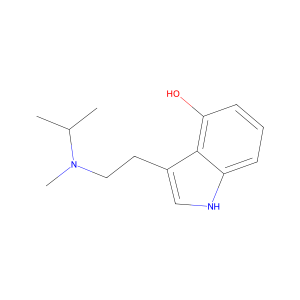
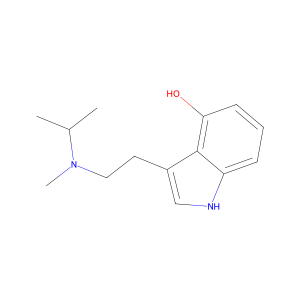
4-HO-MiPT, commonly known as Miprocin, is a synthetic psychedelic tryptamine. Its full chemical name is 4-hydroxy-N-methyl-N-isopropyltryptamine. The compound belongs to the same 4-substituted family as psilocin, but one of the methyl groups on psilocin’s terminal nitrogen is replaced by an isopropyl group. This change gives Miprocin a distinct pharmacological profile, even though the two molecules share the same basic indole structure. It should not be confused with 4-HO-MPT (Meprocin), which carries a straight-chain propyl group rather than an isopropyl group.
Chemistry and early descriptions
Alexander and Ann Shulgin included 4-HO-MiPT in TiHKAL in 1997. Their account described it as a particularly intense tryptamine, with a comparatively rapid onset and a longer experience than psilocin in their observations. They also noted that the compound was unstable when exposed to air and light. These are historical observations from a small number of self-experiments, not a controlled clinical characterization, but they remain an important part of the early record.
The chemical relationship to psilocin is straightforward: both compounds carry a hydroxy group at the 4-position of the indole ring. The difference lies at the terminal amine, where Miprocin has one methyl and one isopropyl substituent. Research on substituted tryptamines shows that changes at this position can influence receptor affinity and activity, so the similarity to psilocin should not be taken to mean that the two substances are pharmacologically interchangeable.
Receptor activity
4-HO-MiPT has been examined in several receptor studies. In a 2023 investigation, Kozell and colleagues found that it interacted with 5-HT2A, 5-HT2C and 5-HT1A receptors, as well as the serotonin transporter (SERT). In the functional 5-HT2A assay, Miprocin acted as an agonist with high efficacy. The authors also observed activity at several non-serotonergic targets, although the affinities for many of these were weaker. The results are useful for understanding its pharmacology, but receptor assays cannot reproduce the full experience in a human brain. See Kozell et al. (2023), on the pharmacological activity of substituted tryptamines.
A more recent study, published in 2026, compared 4-HO-MiPT with its 4-methoxy analogue and related compounds. Both 4-HO-MiPT and 4-MeO-MiPT activated 5-HT2A receptors in vitro, but the methoxy compound inhibited SERT more potently. In mice, the two compounds produced similar potency in the head-twitch response, while 4-MeO-MiPT produced a lower maximum response. Pretreatment with fluoxetine reduced the head-twitch response to 4-HO-MiPT, suggesting that serotonin-transporter activity can modify the behavioural effects associated with 5-HT2A activation. This is a preclinical result; it does not establish how Miprocin behaves in people taking antidepressants. The study appeared in ACS Chemical Neuroscience in 2026.
Subjective effects
Descriptions collected by PsychonautWiki and the earlier observations in TiHKAL portray Miprocin as a visually active psychedelic with a pronounced emotional and bodily component. Users often compare it with psilocin, although some describe a more energetic or stimulating character. The reports are anecdotal and vary considerably, so they are best read as a record of possible experiences rather than a predictable profile.
| Physical and visual effects | Cognitive and emotional effects |
|---|---|
|
|
Descriptions of the experience vary between accounts. The 2026 receptor study adds a possible explanation for some of the complexity: Miprocin interacts with more than one serotonin target, and transporter activity may influence how 5-HT2A-mediated effects are expressed. That mechanism is still being investigated.
What the evidence shows
4-HO-MiPT has a stronger research basis than many newer tryptamines. Its receptor activity has been measured, and the 2026 work adds a more detailed view of its interaction with SERT and 5-HT2A. Even so, controlled human pharmacokinetic studies remain limited. The detailed effects described online and in TiHKAL have not been clinically validated, and the long-term risks have not been adequately characterized.
4-HO-MiPT Products
Scientific Data
Identity and Structure
| Chemical Name | 4-HO-MiPT |
|---|---|
| Catalog Entity Type | Compound |
| Formula | C14H20N2O |
| Molar Mass | 232.327 g·mol−1 |
| CAS | 77872-43-6 |
| CAS Numbers and Substance Forms | 77872-43-6 |
| Synonyms | 4-OH-MiPT; 4-Hydroxy-N-methyl-N-isopropyltryptamine; Miprocin |
| IUPAC Name | 3-{2-[methyl(propan-2-yl)amino]ethyl}-1H-indol-4-ol |
| InChI | InChI=1S/C14H20N2O/c1-10(2)16(3)8-7-11-9-15-12-5-4-6-13(17)14(11)12/h4-6,9-10,15,17H,7-8H2,1-3H3 |
| InChIKey | RXKGHZCQFXXWFQ-UHFFFAOYSA-N |
| SMILES | CN(C(C)C)CCC2=CNC1=CC=CC(O)=C12 |
Chemical Identifiers
| PubChem CID | 10082683 |
|---|---|
| ChemSpider ID | 8258221 |
| UNII | 4GAJ9OJ8YZ |
| ChEMBL ID | ChEMBL171419 |
| CompTox DTXSID | DTXSID30228492 |
Physical Properties
| Melting Point | 123 to 125 °C (253 to 257 °F) |
|---|
Clinical Data
| Drug Class | Non-selective serotonin receptor agonist; Serotonin 5-HT2A receptor agonist; Serotonergic psychedelic; Hallucinogen |
|---|---|
| Routes of Administration | Oral |
| ATC Code | None |
Pharmacokinetics
| Onset of Action | 10–20 minutes |
|---|---|
| Duration of Action | 4–6 hours |
Legal Status
| Legal Status (Wikipedia Source Text) | BR: Class F2 (Prohibited psychotropics) DE: NpSG (Industrial and scientific use only) UK: Class A US: Unscheduled |
|---|
Sources and Attribution
| Wikipedia Source URL | https://en.wikipedia.org/?curid=3051576 |
|---|