What is LSA?
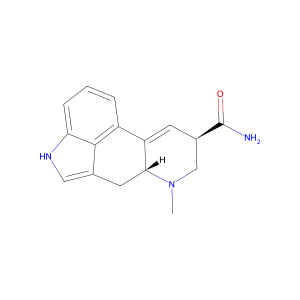
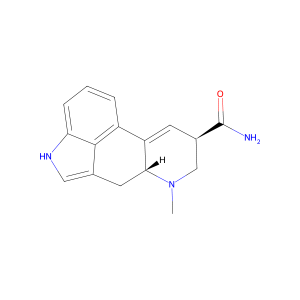
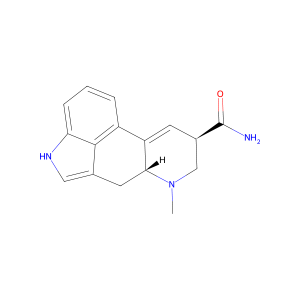
LSA, or lysergic acid amide, is a naturally occurring ergoline alkaloid also known as ergine or LA-111. It is structurally related to LSD, but its amide group is much smaller: LSA has a primary carboxamide, whereas LSD carries two ethyl groups on the amide nitrogen. The difference is important. Although the compounds share the lysergic acid skeleton, their receptor activity and reported effects are not the same.
LSA is found in some plants of the Convolvulaceae family, including species of Argyreia, Ipomoea and Rivea. It is often discussed in connection with Hawaiian baby woodrose and morning glory seeds. These seeds do not contain LSA alone. They may carry a mixture of ergot alkaloids, including isoergine, ergometrine and clavine-type compounds, and their composition can vary between species, batches and even individual seeds.
Natural occurrence and chemical identification
The presence of ergot alkaloids in morning glory seeds is linked to their association with alkaloid-producing fungi. The plants themselves are not necessarily the direct source of every compound detected in the seeds; fungal symbionts can contribute to the alkaloid profile. This helps explain why the composition of seeds sold under the same common name may differ substantially.
In a forensic study of five commercially obtained seed varieties, Nowak and colleagues identified several ergot alkaloids using liquid chromatography coupled to high-resolution mass spectrometry. Only three of the five seed types contained detectable ergot alkaloids. When individual seeds were analysed rather than pooled samples, the concentrations of ergine and ergometrine varied considerably. The study also identified isoforms and other alkaloids, underlining why a seed preparation cannot be treated as a chemically uniform source of LSA. The analytical findings are described in “Identification and determination of ergot alkaloids in Morning Glory cultivars”.
Pharmacology
LSA’s pharmacology is less clearly defined than that of LSD. In a 2013 receptor-profiling study, researchers compared LSA and other alkaloids from Argyreia nervosa with LSD. LSA showed measurable affinity at several serotonin receptors, including 5-HT1A and 5-HT2 sites, but its binding affinity was lower than that of LSD in the assays used. The authors also found predicted interactions with adrenergic and dopaminergic targets. These results suggest a broader pharmacological picture than a simple LSD-like 5-HT2A mechanism, although receptor binding alone does not establish the contribution of each target to the human experience.
The distinction between LSA and LSD is reflected in the human literature. LSA is often described as less strongly psychedelic, while nausea, abdominal discomfort and other autonomic effects are prominent in reports. A lower apparent psychedelic intensity does not necessarily mean a more favourable overall effect profile.
Subjective effects
Human observations of LSA come from a mixture of older clinical reports, poison-centre records, case reports and accounts of seed use. A 2025 systematic review identified 17 studies reporting original human data. Across this literature, the reported effects included changes in perception, euphoria and altered thinking, but also nausea, vomiting, abdominal pain, anxiety and cardiovascular symptoms. The studies were heterogeneous: the material consumed was not always chemically standardized, and reported seed quantities do not translate reliably into a measured amount of LSA.
| Physical and perceptual effects | Cognitive and emotional effects |
|---|---|
|
|
Across the studies that reported clinical outcomes, the review included 219 patients; 27 (12.3%) required medical attention. This pooled proportion is not a population-level estimate, because the included reports were heterogeneous and often involved selected clinical cases. The review also identified serious outcomes, including hospitalization and a case of posterior reversible encephalopathy syndrome (PRES) considered likely to have been associated with LSA exposure. These reports are not evidence that severe complications are typical, but they show that the effects cannot be reduced to a mild or predictable version of an LSD experience. The authors found no reliable dose–response relationship across the available human studies. Their synthesis is available in the 2025 systematic review of LSA’s pharmacological effects and adverse outcomes.
Why seed preparations are difficult to interpret
One recurring problem in the LSA literature is that people often report the number of seeds consumed rather than an analytically measured exposure. Seed alkaloid concentrations vary, and the other compounds in the material may contribute to the experience or to physical discomfort. Even when a study identifies LSA in a sample, that does not establish that LSA alone caused the reported symptoms.
LSA is a distinct lysergamide with documented human psychoactivity, although its pharmacological profile remains incomplete. Its natural occurrence does not make seed preparations standardized, and comparisons with LSD should remain qualified by the substantial differences in chemistry, reported effects and available clinical evidence.
LSA Products
Scientific Data
Identity and Structure
| Chemical Name | LSA |
|---|---|
| Catalog Entity Type | Compound |
| Formula | C16H17N3O |
| Molar Mass | 267.332 g·mol−1 |
| CAS | 478-94-4 |
| CAS Numbers and Substance Forms | 478-94-4 |
| Synonyms | Lysergic acid amide; LSA; LAA; ᴅ-Lysergic acid amide; ᴅ-Lysergamide, d-Lysergamide; LA-111; "Lacy"; 6-Methyl-9,10-didehydroergoline-8β-carboxamide |
| IUPAC Name | (6aR,9R)-7-methyl-6,6a,8,9-tetrahydro-4H-indolo[4,3-fg]quinoline-9-carboxamide |
| InChI | InChI=1S/C16H17N3O/c1-19-8-10(16(17)20)5-12-11-3-2-4-13-15(11)9(7-18-13)6-14(12)19/h2-5,7,10,14,18H,6,8H2,1H3,(H2,17,20)/t10-,14-/m1/s1 |
| InChIKey | GENAHGKEFJLNJB-QMTHXVAHSA-N |
| SMILES | O=C(N)[C@@H]1C=C2C3=CC=CC4=C3C(C[C@@]2([H])N(C1)C)=CN4 |
Chemical Identifiers
| PubChem CID | 442072 |
|---|---|
| ChemSpider ID | 390611 |
| ChEBI ID | CHEBI:4819 |
| UNII | 073830XH10 |
| ChEMBL ID | ChEMBL227213 |
| CompTox DTXSID | DTXSID20893673 |
| ECHA ID | 100.006.841 |
Physical Properties
| Melting Point | 135 °C (275 °F) Decomposes |
|---|
Clinical Data
| Drug Class | Serotonin receptor agonist; Serotonergic psychedelic; Hallucinogen; Sedative |
|---|---|
| Routes of Administration | Oral, intramuscular injection, subcutaneous injection |
| ATC Code | None |
| Pregnancy Category (Source Text) | X |
Pharmacokinetics
| Metabolism | Hepatic |
|---|---|
| Onset of Action | 0.3–3 h (morn. glory seeds) |
| Duration of Action | 4–10 h (morn. glory seeds) |
| Excretion | Urine |
Legal Status
| Legal Status (Wikipedia Source Text) | BR: Class F2 (Prohibited psychotropics) DE: NpSG (Industrial and scientific use only) UK: Class A US: Schedule III Illegal in France |
|---|
Sources and Attribution
| Wikipedia Source URL | https://en.wikipedia.org/?curid=373974 |
|---|