What is MET?
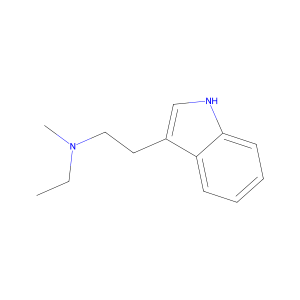
MET, or N-methyl-N-ethyltryptamine, is a synthetic tryptamine with a chemical structure related to DMT. The two methyl groups on DMT’s terminal nitrogen are replaced by one methyl and one ethyl group. This places MET between several better-known N-alkyl tryptamines, including DET, although the compounds should not be assumed to share the same oral activity or duration.
Chemistry and relationship to other tryptamines
MET retains the unsubstituted indole ring and ethylamine side chain characteristic of simple tryptamines. Its distinguishing feature is the mixed methyl-ethyl substitution at the terminal nitrogen. The change affects the steric and metabolic properties of the molecule, but there is little direct experimental work showing how those differences translate into receptor activity or human pharmacokinetics.
MET is not the same compound as 4-HO-MET or 5-MeO-MET. Those substances carry additional substituents on the indole ring, and their pharmacology cannot be transferred to the unsubstituted molecule. The shared “MET” portion of the name refers to the N-methyl-N-ethyl group, not to a single pharmacological profile.
Pharmacology and metabolism
MET is generally classified as a psychedelic tryptamine, but its receptor pharmacology has not been characterized in the same way as that of DMT or psilocin. Its structure makes interaction with serotonin receptors plausible, yet a detailed, compound-specific profile of affinity and functional efficacy is lacking in the peer-reviewed literature.
Like other simple tryptamines, MET is expected to be subject to oxidative deamination by monoamine oxidase enzymes. This may limit oral activity compared with tryptamines whose nitrogen substitution or additional structural groups make them less susceptible to rapid metabolism. However, the available evidence does not provide a reliable human pharmacokinetic model for MET.
Reported effects
The human evidence is sparse and consists mainly of individual reports. A review of psychoactive tryptamines notes that effects have been described after inhalation and oral exposure, but emphasizes that little scientific information is available about MET’s pharmacology or toxicity in humans. The reported experience is generally compared with DMT and other simple tryptamines, but this comparison is not supported by controlled head-to-head studies. The review is available as “Toxicology and Analysis of Psychoactive Tryptamines”.
Accounts describe a mixture of physical stimulation, tactile changes and altered perception. Some mention visual phenomena and changes in thought, while others emphasize bodily sensations more than immersive visual imagery. The small number of reports makes it difficult to determine which effects are characteristic and which reflect individual variation or differences in the material consumed.
| Reported physical and perceptual effects | Reported cognitive and emotional effects |
|---|---|
|
|
These reports have not been clinically validated. There are no controlled human studies establishing MET’s onset, duration, dose-response relationship or incidence of adverse reactions.
Forensic and safety considerations
The limited research also means that MET is not well represented in clinical toxicology. A routine drug screen may not identify it, and interpretation of a suspected exposure requires a targeted analytical method. Reports involving products sold under a particular name should be treated cautiously unless the material has been chemically confirmed.
MET is a simple N-alkyl tryptamine whose reported psychedelic activity remains largely anecdotal; direct pharmacological and toxicological studies are scarce. Comparisons with DMT and DET help explain its chemical context, but do not establish its human effects.
MET Products
Scientific Data
Identity and Structure
| Chemical Name | Methylethyltryptamine |
|---|---|
| Catalog Entity Type | Compound |
| Formula | C13H18N2 |
| Molar Mass | 202.301 g·mol−1 |
| CAS | 5599-69-9 |
| CAS Numbers and Substance Forms | 5599-69-9 |
| Synonyms | MET; N-Methyl-N-ethyltryptamine; N,N-MET |
| IUPAC Name | N-ethyl-2-(1H-indol-3-yl)-N-methylethan-1-amine |
| InChI | InChI=1S/C13H18N2/c1-3-15(2)9-8-11-10-14-13-7-5-4-6-12(11)13/h4-7,10,14H,3,8-9H2,1-2H3 |
| InChIKey | MYEGVMLMDWYPOA-UHFFFAOYSA-N |
| SMILES | c1cccc2c1c(c[nH]2)CCN(CC)C |
Chemical Identifiers
| PubChem CID | 824845 |
|---|---|
| ChemSpider ID | 720502 |
| UNII | 4KX1J1D3RD |
| CompTox DTXSID | DTXSID901024010 |
Clinical Data
| Drug Class | Serotonergic psychedelic; Hallucinogen; Serotonin 5-HT2A and 5-HT2C receptor agonist; Serotonin releasing agent |
|---|---|
| Routes of Administration | Oral; Vaporized/inhaled |
| ATC Code | None |
Pharmacokinetics
| Onset of Action | Unknown |
|---|---|
| Duration of Action | Unknown |
Sources and Attribution
| Wikipedia Source URL | https://en.wikipedia.org/?curid=1012509 |
|---|