What is MDMA (Ecstasy)?
MDMA, or 3,4-methylenedioxymethamphetamine, is a synthetic ring-substituted amphetamine with stimulant and empathogenic effects. It is commonly known as Ecstasy or Molly, although these street names refer to products whose contents may not always be chemically verified. MDMA is closely related to MDA and MDEA, but the three compounds are distinct molecules with different pharmacological profiles.
History and chemical structure
MDMA was first synthesized in 1912 by the pharmaceutical company Merck during research into compounds related to hydrastinine. It was not developed as a medicine at that time. Interest in its psychoactive properties emerged later, particularly during the 1970s and 1980s, when it was explored in psychotherapy before becoming widely associated with nonmedical use in nightlife settings.
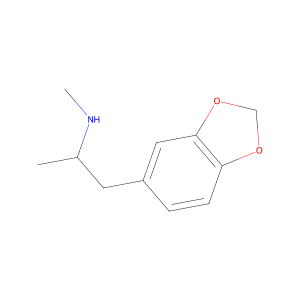
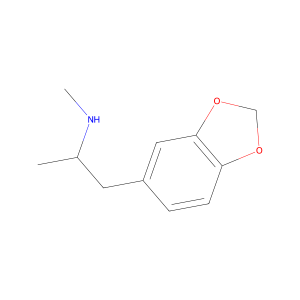
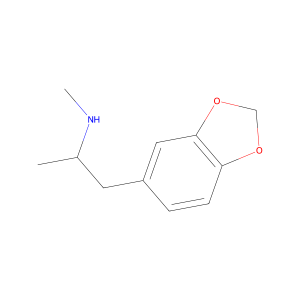
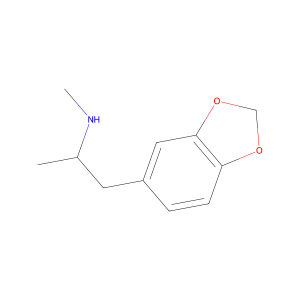
The molecule contains a methylenedioxy bridge across the 3- and 4-positions of the aromatic ring, together with the alpha-methyl group of amphetamine and an N-methyl substituent. The ring substitution contributes to its mixed stimulant and mescaline-like properties, while the terminal amine is important for transporter interactions. MDA differs by lacking the N-methyl group; MDEA carries an N-ethyl group instead.
Pharmacology
MDMA acts primarily as a substrate at monoamine transporters. It enters presynaptic neurons through the serotonin transporter (SERT), as well as the dopamine and noradrenaline transporters, and promotes the release of these neurotransmitters. Its distinct profile as an entactogen rather than a classic serotonergic psychedelic is discussed in a 2025 review of the clinical pharmacology of psychoactive compounds. Its effects are especially pronounced in the serotonin system. This distinguishes MDMA from classic psychedelics such as LSD, whose acute perceptual effects are more directly associated with 5-HT2A receptor activation.
MDMA also interacts with several receptor systems indirectly through the increase in extracellular monoamines. Serotonin release contributes to changes in mood, sensory processing and social-emotional responses, while noradrenaline and dopamine contribute to stimulation and cardiovascular activation. Oxytocin release has also been observed in human studies, although its precise contribution to feelings of trust and social closeness remains under investigation.
Pharmacokinetics and metabolism
After oral administration, MDMA is absorbed from the gastrointestinal tract and typically reaches peak plasma concentrations within about two hours under fasting conditions. Its elimination is mainly hepatic. CYP2D6 is an important enzyme in its metabolism, with additional contributions from CYP2B6, CYP2C19, CYP1A2 and CYP3A4.
One unusual feature is that MDMA inhibits CYP2D6, including the enzyme involved in its own metabolism. This can produce nonlinear pharmacokinetics: increasing exposure does not always follow a simple proportional relationship with increasing dose. A 2025 population and physiologically based pharmacokinetic analysis examined this self-inhibition and its implications for drug interactions, including the effect of split administration and co-medications. The findings are described in “MDMA pharmacokinetics: A population and physiologically based pharmacokinetics model-informed analysis”.
MDMA is metabolized through O-demethylenation to HHMA, followed by O-methylation to HMMA and conjugation with sulfate or glucuronic acid. N-demethylation produces MDA, a psychoactive metabolite. The relative contribution of these pathways varies between individuals and can be affected by genetic differences and interacting medicines.
Subjective effects
The characteristic experience of MDMA is often described as empathogenic: users report increased emotional openness, closeness to other people and a heightened appreciation of music and touch. The compound also produces stimulant effects, including wakefulness and reduced perception of fatigue. These responses are not universal, and the balance between positive subjective effects and physical discomfort can vary considerably.
| Physical and sensory effects | Cognitive and emotional effects |
|---|---|
|
|
Controlled human studies confirm that MDMA can increase feelings of energy, closeness to others and heightened sensory perception, while also producing measurable cardiovascular effects. In one randomized inpatient study, heart rate and blood pressure increased in a dose-dependent manner, with peak subjective effects generally occurring within one to two hours. The small sample and controlled environment limit how far those findings can be generalized to unregulated products or crowded, hot settings. The study is available in “Physiological and Subjective Responses to Controlled Oral MDMA Administration”.
Acute toxicity and longer-term concerns
MDMA toxicity is influenced by more than the amount of drug present in the body. Hyperthermia, dehydration, excessive water intake and hyponatremia can all contribute to severe complications. Acute poisoning may involve agitation, seizures, arrhythmias, liver injury, rhabdomyolysis and disseminated intravascular coagulation. Environmental heat and sustained exertion can increase the risk of dangerous temperature elevation.
Repeated exposure has also been associated with changes in serotonergic function in animal studies. The extent to which these findings translate into persistent neurocognitive effects in humans remains debated, partly because studies of frequent users are complicated by polydrug use, differences in exposure and pre-existing factors.
Clinical research into MDMA-assisted therapy has provided new information about its pharmacology and short-term tolerability under controlled conditions. Those findings do not characterize the risks of unregulated products, uncertain composition or use without medical supervision. The same substance can produce very different outcomes depending on the individual, the environment and the presence of other drugs.
MDMA (Ecstasy) Products
Scientific Data
Identity and Structure
| Chemical Name | MDMA |
|---|---|
| Catalog Entity Type | Compound |
| Formula | C11H15NO2 |
| Molar Mass | 193.246 g·mol−1 |
| CAS | 42542-10-9 64057-70-1 |
| CAS Numbers and Substance Forms | 42542-10-9 64057-70-1 (HCl) |
| Synonyms | 3,4-MDMA; Ecstasy (E, X, XTC); Midomafetamine; Molly; Mandy; Pingers/Pingas |
| IUPAC Name | (RS)-1-(1,3-benzodioxol-5-yl)-N-methylpropan-2-amine |
| InChI | InChI=1S/C11H15NO2/c1-8(12-2)5-9-3-4-10-11(6-9)14-7-13-10/h3-4,6,8,12H,5,7H2,1-2H3 |
| InChIKey | SHXWCVYOXRDMCX-UHFFFAOYSA-N |
| SMILES | CC(NC)CC1=CC=C(OCO2)C2=C1 |
| Chirality | Racemic mixture |
Chemical Identifiers
| PubChem CID | 1615 |
|---|---|
| ChemSpider ID | 1556 |
| DrugBank ID | DB01454 |
| ChEBI ID | CHEBI:1391 |
| KEGG ID | D11172 |
| UNII | KE1SEN21RM |
| ChEMBL ID | ChEMBL43048 |
| IUPHAR/BPS ID | 4574 |
| CompTox DTXSID | DTXSID90860791 |
| PDB Ligand | B41 (PDBe, RCSB PDB) |
Physical Properties
| Density | 1.1 g/cm3 |
|---|---|
| Boiling Point | 105 °C (221 °F) at 0.4 mmHg (experimental) |
Clinical Data
| Drug Class | Entactogen; Stimulant; Psychedelic; Serotonin–norepinephrine–dopamine releasing agent; 5-HT2 receptor agonist |
|---|---|
| Pronunciation | methylenedioxymethamphetamine: /ˌmɛθɪliːndaɪˈɒksi/ /ˌmɛθæmˈfɛtəmiːn/ |
| Routes of Administration | Common: By mouth Uncommon: Insufflation, inhalation, injection, rectal |
| ATC Code | None |
| Dependence Liability | Physical: Not typical Psychological: Moderate |
| Addiction Liability | Low–moderate |
| AHFS / Drugs.com | MDMA |
Pharmacokinetics
| Bioavailability | Oral: Unknown |
|---|---|
| Protein Binding | Unknown |
| Metabolism | Liver, CYP450 extensively involved, including CYP2D6 |
| Metabolites | MDA, HMMA, HMA, HHMA, HHA, THMA, THA, MDP2P, MDOH 3-MMOTI |
| Onset of Action | Oral: 30–45 min |
| Elimination Half-life | MDMA: 8.7 (range 4.6–16) hours (S)-MDMA: 5.1 (range 3.5–7.4) hours (R)-MDMA: 11 (range 5.1–24) hours |
| Duration of Action | 3–6 hours |
| Excretion | Kidney |
Legal Status
| Legal Status (Wikipedia Source Text) | AU: S8 (PTSD) S9 (all other uses) BR: Class F2 (Prohibited psychotropics) CA: Schedule I DE: Anlage I (Authorized scientific use only) NZ: Class B UK: Class A US: Schedule I UN: Psychotropic Schedule I EU: Fully prohibited SE: Förteckning I |
|---|
Sources and Attribution
| Wikipedia Source URL | https://en.wikipedia.org/?curid=10024 |
|---|