What is ALD-52?
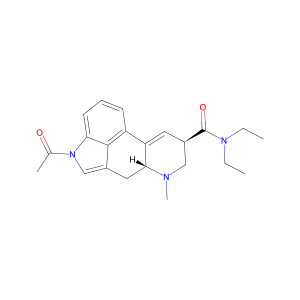
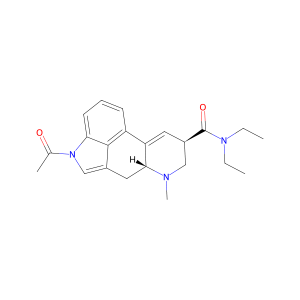
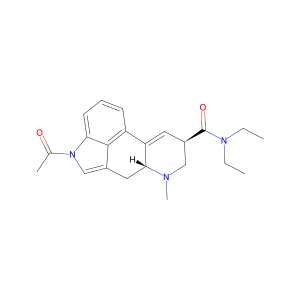
ALD-52, also known as 1-acetyl-LSD, 1A-LSD or acetyldiethylamide, is an N1-acyl derivative of lysergic acid diethylamide. An acetyl group is attached to the indole nitrogen of the LSD structure. The compound is closely related to LSD and to later N1-substituted lysergamides such as 1P-LSD and 1B-LSD. Unlike many recently marketed analogues, ALD-52 has a history of human research dating back to the 1950s.
Discovery and early human studies
ALD-52 was first synthesized by Franz Troxler and Albert Hofmann in 1957. It was subsequently studied in small human experiments, including work by Rothlin, Abramson, Isbell and colleagues, and Malitz and colleagues. These early reports generally described effects resembling those of LSD, with a similar time course. Some investigators considered the two compounds equipotent, while Abramson reported ALD-52 as somewhat less potent. The studies were small and used methods that predate modern clinical-trial standards, so their numerical comparisons should be interpreted in that historical context.
In experiments involving both healthy participants and psychiatric patients, ALD-52 and LSD produced broadly similar effects. One report described somewhat greater changes in cognition and body image after ALD-52, but the available studies do not support a detailed modern comparison of their subjective profiles. The early clinical literature is reviewed in Halberstadt and colleagues’ study of N1-acylated LSD derivatives.
Pharmacology and conversion to LSD
The central question surrounding ALD-52 has been whether the compound is active in its own right or whether it acts mainly as a prodrug that releases LSD. N1-acyl substitution reduces the ability of LSD to activate the 5-HT2A receptor directly. This makes conversion to LSD a plausible explanation for the psychedelic effects observed in humans.
Halberstadt and colleagues examined ALD-52 alongside 1P-LSD and 1B-LSD in a 2019 study. They found that the N1-acyl derivatives had substantially reduced affinity and efficacy at several monoamine receptors compared with LSD. In vitro experiments showed that ALD-52 was converted to LSD in pooled human liver S9 fractions, while animal work indicated rapid conversion after administration to mice. The findings support the prodrug interpretation, although they do not provide a complete human pharmacokinetic profile for ALD-52. See “Pharmacological and biotransformation studies of 1-acyl-substituted derivatives of d-lysergic acid diethylamide”.
Reported effects
The historical human studies and later user accounts generally describe ALD-52 as producing an LSD-like psychedelic experience. Reports include visual enhancement, geometric patterns, changes in colour and depth perception, altered time perception and shifts in thought and mood. The small clinical studies provide more direct evidence than online reports, but they were not conducted using contemporary trial designs.
| Physical and visual effects | Cognitive and emotional effects |
|---|---|
|
|
ALD-52 is often described as though it were LSD under another name, whereas the evidence points to conversion of ALD-52 into LSD. That distinction matters when interpreting both pharmacological experiments and toxicological samples.
Analytical and forensic considerations
Because ALD-52 can be hydrolysed to LSD, biological samples may contain LSD even when the original exposure was to ALD-52. The 2019 metabolic study also found that several N1-acyl lysergamides can generate overlapping metabolites. Detecting LSD alone may therefore be insufficient to identify the precursor compound, especially if sample handling has allowed hydrolysis to occur.
ALD-52 has a longer scientific history than most novel lysergamides, including early human experiments and modern laboratory studies of its conversion to LSD. Even so, the historical clinical evidence is limited by small sample sizes and older methods, while detailed modern pharmacokinetic and safety studies remain scarce.
ALD-52 Products
Scientific Data
Identity and Structure
| Chemical Name | ALD-52 |
|---|---|
| Catalog Entity Type | Compound |
| Formula | C22H27N3O2 |
| Molar Mass | 365.477 g·mol−1 |
| CAS | 3270-02-8 |
| CAS Numbers and Substance Forms | 3270-02-8 |
| Synonyms | ALD52; ALD; 1-Acetyl-N,N-diethyllysergamide; 1-Acetyl-LSD; 1A-LSD; N-Acetyl-LSD; N6-Acetyl-LSD; Acetyl-LSD; Orange Sunshine; Orange Sunshine Acid |
| IUPAC Name | (6aR,9R)-4-Acetyl-N,N-diethyl-7-methyl-4,6,6a,7,8,9-hexahydroindolo[4,3-fg]quinoline-9-carboxamide |
| InChI | InChI=1S/C22H27N3O2/c1-5-24(6-2)22(27)16-10-18-17-8-7-9-19-21(17)15(13-25(19)14(3)26)11-20(18)23(4)12-16/h7-10,13,16,20H,5-6,11-12H2,1-4H3/t16-,20-/m1/s1 |
| InChIKey | FJOWXGYLIWJFCH-OXQOHEQNSA-N |
| SMILES | O=C(n1cc2c3c(C4=C[C@@H](C(=O)N(CC)CC)CN([C@@H]4C2)C)cccc13)C |
Chemical Identifiers
| PubChem CID | 201111 |
|---|---|
| ChemSpider ID | 174121 |
| UNII | R224WJZ8M7 |
| CompTox DTXSID | DTXSID20186370 |
Clinical Data
| Drug Class | Serotonin receptor agonist; Serotonin 5-HT2A receptor agonist; Serotonergic psychedelic; Hallucinogen |
|---|---|
| Routes of Administration | Oral |
Pharmacokinetics
| Metabolism | Deacetylation (CYP3A4) |
|---|---|
| Metabolites | LSD, others |
| Onset of Action | Similar to LSD |
| Duration of Action | Similar to LSD |
Legal Status
| Legal Status (Wikipedia Source Text) | AU: Unscheduled BR: Class F2 (Prohibited psychotropics) CA: Unscheduled DE: NpSG (Industrial and scientific use only) UK: Class A US: Unscheduled, could be prosecuted under the Federal Analogue Act. Unscheduled in the most countries of the world, Illegal in France, Romania, Switzerland, Finland and Singapore |
|---|
Sources and Attribution
| Wikipedia Source URL | https://en.wikipedia.org/?curid=1833646 |
|---|