What is 1P-LSD?
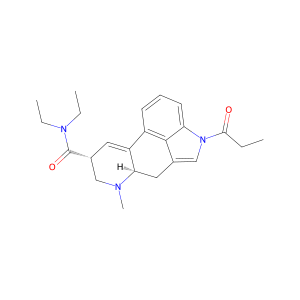
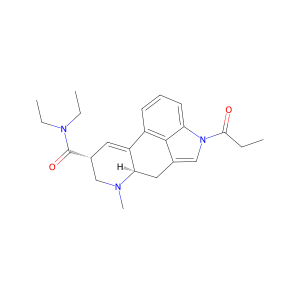
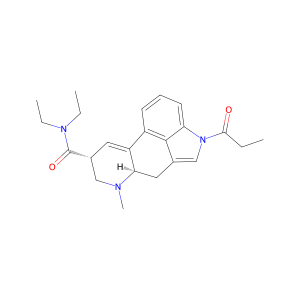
1P-LSD, also called 1-propionyl-LSD or 1-propionyl-d-lysergic acid diethylamide, is an N1-acyl derivative of lysergic acid diethylamide. A propionyl group is attached to the indole nitrogen of the LSD structure. The compound is closely related to LSD and to other N1-substituted lysergamides, including 1B-LSD and 1cP-LSD. It has received more scientific attention than many newer derivatives, particularly because its conversion to LSD has been examined in laboratory experiments and in a small human study.
Chemistry and early research
The propionyl group distinguishes 1P-LSD from LSD itself, while leaving the rest of the lysergamide scaffold unchanged. The substitution occurs at N1, the indole nitrogen. This is the same position modified in ALD-52 and several other derivatives, although the attached groups differ.
When 1P-LSD appeared on the new psychoactive substance market, there was little published analytical information about it. In their analytical and behavioural study of 1P-LSD, Brandt and colleagues used chromatography, mass spectrometry, infrared spectroscopy and NMR to establish its identity. They also examined its effects in mice using the head-twitch response (HTR), a behavioural assay associated with 5-HT2A receptor activation.
1P-LSD produced a dose-dependent increase in head-twitch behaviour. Its estimated potency in that assay was about 38% of LSD’s, and the response was blocked by pretreatment with a selective 5-HT2A antagonist. This supports serotonergic psychedelic-like activity in the mouse model, but it does not directly measure human potency.
Conversion to LSD
The prodrug hypothesis for 1P-LSD emerged from several lines of evidence. In-vitro experiments found that the propionyl group could be removed, producing LSD. Animal studies also detected LSD after administration of 1P-LSD. These observations suggested that the compound’s effects might be mediated, at least in part, by LSD formed through hydrolysis.
A 2019 study of nine lysergamides examined their metabolism in pooled human liver S9 fractions. It found deacylation of 1P-LSD to LSD, alongside other metabolic routes such as N-dealkylation and hydroxylation. The work also showed why metabolite interpretation can be difficult: several different lysergamides can produce identical metabolites. In their 2019 investigation of nine LSD-based new psychoactive substances, Wagmann and colleagues described this overlap alongside the conversion of N1-acyl compounds to their corresponding lysergamides.
Human pharmacokinetics
The most direct evidence comes from Grumann and colleagues’ 2020 study of two human volunteers. The researchers examined oral and intravenous administration and analysed serum and urine with a validated LC–MS/MS method. After oral administration, only LSD was detected. Following intravenous administration, 1P-LSD remained measurable for a short period, while LSD was detected for longer. The authors estimated that the bioavailability of LSD formed after oral 1P-LSD was close to 100%.
Subjective effects in the two volunteers peaked roughly two to three hours after administration and lasted about eight to ten hours. Their time course was broadly comparable to that reported for LSD itself. The findings strongly support conversion of 1P-LSD to LSD in humans, but two participants cannot establish the full range of individual responses, uncommon adverse effects or how the compound behaves in a wider population.
Subjective effects
User descriptions collected in PsychonautWiki’s 1P-LSD entry generally place the compound close to LSD in its subjective character. Visual geometry, colour enhancement, changes in depth and perspective, altered time perception and increased attention to music are frequently described. Introspection, thought acceleration and changes in emotional tone also appear in the accounts.
| Physical and perceptual effects | Cognitive and emotional effects |
|---|---|
|
|
These descriptions come from user reports rather than a controlled study of 1P-LSD’s subjective effects. The small human pharmacokinetic study supports an LSD-like time course, but it does not validate every effect described online or show that the intact molecule has no activity of its own.
Forensic interpretation and safety
Conversion to LSD complicates the interpretation of biological samples. A person exposed to 1P-LSD may have only LSD detectable in serum or urine by the time a sample is collected. A published intoxication case discussed by the researchers found LSD without detectable 1P-LSD, a result consistent with hydrolysis but not sufficient on its own to distinguish an exposure to 1P-LSD from direct LSD exposure.
The two-volunteer study is unusually informative for a research lysergamide, but it cannot establish how uncommon reactions, long-term outcomes or interactions may vary across a wider population. The similarity to LSD is well supported for the metabolic pathway and broad time course; safety remains incompletely assessed.
1P-LSD Products
Scientific Data
Identity and Structure
| Chemical Name | 1P-LSD |
|---|---|
| Catalog Entity Type | Compound |
| Formula | C23H29N3O2 |
| Molar Mass | 379.504 g·mol−1 |
| CAS | 2349358-81-0 |
| CAS Numbers and Substance Forms | 2349358-81-0 Y |
| Synonyms | 1-Propanoyl-lysergic acid diethylamide; 1-Propanoyl-LSD; 1-Propionyl-LSD |
| IUPAC Name | (6aR,9R)-N,N-diethyl-7-methyl-4-propanoyl-6,6a,8,9-tetrahydroindolo[4,3-fg]quinoline-9-carboxamide |
| InChI | InChI=1S/C23H29N3O2/c1-5-21(27)26-14-15-12-20-18(17-9-8-10-19(26)22(15)17)11-16(13-24(20)4)23(28)25(6-2)7-3/h8-11,14,16,20H,5-7,12-13H2,1-4H3/t16-,20-/m1/s1 |
| InChIKey | JSMQOVGXBIDBIE-OXQOHEQNSA-N |
| SMILES | CCN(CC)C(=O)[C@H]1CN(C)[C@@H]2Cc3cn(C(=O)CC)c4cccc(C2=C1)c34 |
Chemical Identifiers
| PubChem CID | 119025985 |
|---|---|
| ChemSpider ID | 52085129 |
| UNII | 23R2G2G79C |
| CompTox DTXSID | DTXSID701016895 |
Clinical Data
| Drug Class | Serotonin receptor agonist; Serotonin 5-HT2A receptor agonist; Serotonergic psychedelic; Hallucinogen |
|---|---|
| Routes of Administration | Oral |
| ATC Code | None |
Pharmacokinetics
| Bioavailability | ~100% |
|---|---|
| Metabolism | Hydrolysis |
| Metabolites | LSD |
| Elimination Half-life | Initial: ~0.2 hours |
| Duration of Action | 8–12 hours |
Legal Status
| Legal Status (Wikipedia Source Text) | AU: S8 (Controlled drug) BR: Class F2 (Prohibited psychotropics) CA: Unscheduled. DE: NpSG (Industrial and scientific use only) UK: Under Psychoactive Substances Act US: Unscheduled (may be considered illegal if sold for human consumption as an analog of LSD under the federal analogue act) UN: Unscheduled In general Unscheduled, unless that was sold for human consumption, could be sold for medical and research purposes. |
|---|
Sources and Attribution
| Wikipedia Source URL | https://en.wikipedia.org/?curid=47506513 |
|---|