What is 4-HO-MET?
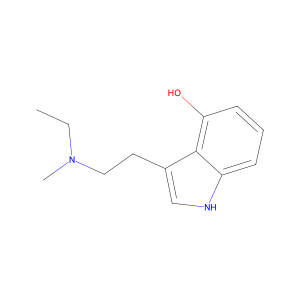
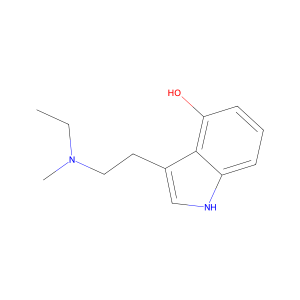
4-HO-MET, also known as Metocin, Methylcybin or Colour, is a synthetic psychedelic tryptamine. Its chemical name is 4-hydroxy-N-methyl-N-ethyltryptamine. It is structurally related to psilocin, but one of the two methyl groups on psilocin’s terminal nitrogen is replaced by an ethyl group. The corresponding acetate ester is 4-AcO-MET, also known as Metacetin.
History and chemical structure
4-HO-MET was synthesized by Alexander Shulgin and described in his 1997 book TiHKAL. Reports of human use became more visible after the compound appeared on the online research-chemical market in the late 2000s. Its name, Metocin, reflects its relationship to the base tryptamine MET and to the 4-hydroxy series that includes psilocin, Ethocin and Miprocin.
The hydroxy group at the 4-position is shared with psilocin, but the nitrogen substitution changes the molecule’s receptor profile. This is not a minor naming difference: even relatively small changes to the terminal amine can affect receptor affinity, efficacy and the balance of subjective effects.
Pharmacology
4-HO-MET has been examined in laboratory receptor assays. In a 2023 study, Kozell and colleagues measured its interaction with 5-HT2A, 5-HT2C and 5-HT1A receptors. It showed strong affinity for 5-HT2A in the assay and acted as a partial agonist, producing a lower maximum response than serotonin. The compound also interacted with 5-HT2C and 5-HT1A receptors. These results provide a more direct pharmacological basis than structural comparison alone, although they do not establish how receptor activity translates into the full human experience. The study is available in the Journal of Pharmacology and Experimental Therapeutics.
Metabolism and forensic detection
4-HO-MET has a comparatively useful metabolic research record for a synthetic tryptamine. Bruni and colleagues studied its metabolism in pooled human liver microsomes and examined three authentic urine samples. They identified twelve metabolites in vitro and four in vivo. The main transformations included mono- and dihydroxylation, demethylation, deethylation, oxidative deamination and formation of a carboxylic acid. In the urine samples, monohydroxylation and glucuronidation were observed. The authors recommended the N-oxide, hydroxy-alkyl metabolites and glucuronides as useful targets in forensic testing. Bruni and colleagues detailed these transformations in their 2018 study of 4-HO-MET metabolism.
A later clinical toxicology case showed why the choice of analytical method matters. In a patient with suspected intoxication, 4-HO-MET was detected in blood plasma using liquid-chromatography screening, but it was not detected by the gas-chromatography method used in the same investigation. Four metabolites were identified, and the measured plasma concentration was 193 ng/mL. Although the report cannot establish a general concentration-effect relationship, it shows how an unsuitable screening method can miss the compound. See “Can the Intake of a Synthetic Tryptamine be Detected Only by Blood Plasma Analysis? A Clinical Toxicology Case Involving 4-HO-MET”.
There is also a separate analytical pitfall. A metabolite of the medication ropinirole was shown to interfere with an LC-MS/MS screen for 4-HO-MET because of structural and spectral similarities. The investigators corrected the identification after reviewing the spectra and comparing them with a reference standard. This case is a reminder that even sensitive analytical methods can produce misleading results if the clinical context and confirmatory criteria are not considered. The interference is described in “Ropinirole metabolite mimics a new psychoactive substance (4-HO-MET) in LC-MS/MS”.
Subjective effects
User reports summarized by PsychonautWiki often distinguish Metocin from psilocin by placing greater emphasis on visual effects and a comparatively light mental state. Colour enhancement, geometric imagery and changes in time perception are common themes. Some users describe it as more recreational or less emotionally demanding than mushrooms, although this impression is subjective and should not be generalized.
| Physical and visual effects | Cognitive and emotional effects |
|---|---|
|
|
The subjective descriptions are anecdotal, but the metabolic and receptor studies provide independent evidence that 4-HO-MET is an active serotonergic tryptamine. They do not establish a safe or predictable experience, and the clinical case literature shows that analytical detection and interpretation can be challenging.
4-HO-MET Products
Scientific Data
Identity and Structure
| Chemical Name | 4-HO-MET |
|---|---|
| Catalog Entity Type | Compound |
| Formula | C13H18N2O |
| Molar Mass | 218.300 g·mol−1 |
| CAS Numbers and Substance Forms | 77872–41–4 |
| Synonyms | 4-OH-MET; 4-Hydroxy-N-methyl-N-ethyltryptamine; Metocin; Methylcybin |
| IUPAC Name | 3-{2-[Ethyl(methyl)amino]ethyl}-1H-indol-4-ol |
| InChI | InChI=1S/C13H18N2O/c1-3-15(2)8-7-10-9-14-11-5-4-6-12(16)13(10)11/h4-6,9,14,16H,3,7-8H2,1-2H3 |
| InChIKey | ORWQBKPSGDRPPA-UHFFFAOYSA-N |
| SMILES | CCN(C)CCc2c[nH]c1cccc(O)c12 |
Chemical Identifiers
| PubChem CID | 21786582 |
|---|---|
| ChemSpider ID | 10513072 |
| UNII | 6RN01B78NY |
| CompTox DTXSID | DTXSID70228491 |
Clinical Data
| Drug Class | Non-selective serotonin receptor agonist; Serotonin 5-HT2A receptor agonist; Serotonergic psychedelic; Hallucinogen |
|---|---|
| Routes of Administration | Oral |
| ATC Code | None |
Pharmacokinetics
| Onset of Action | ≤30 minutes |
|---|---|
| Duration of Action | 4–6 hours |
Legal Status
| Legal Status (Wikipedia Source Text) | US: Unscheduled Schedule I controlled substance in Virginia |
|---|
Sources and Attribution
| Wikipedia Source URL | https://en.wikipedia.org/?curid=11679531 |
|---|